Introduction to RedotPay Crypto Virtual Card
As someone who evaluates dozens of crypto payment solutions annually, I consider the RedotPay virtual Visa card one of the most efficient off-ramps currently functioning in the market. Backed by a Hong Kong-based fintech entity holding a Trust or Company Service Provider (TCSP) license, it serves a highly specific function: bridging your self-custodied or exchange-held Web3 assets directly to traditional retail payment systems.
Unlike traditional debit cards tied to a fiat checking account, RedotPay operates entirely on a prepaid crypto model. We utilize it by transferring stablecoins (USDT, USDC) or major liquid assets (BTC, ETH) directly into the RedotPay application via networks like Tron, Binance Smart Chain, or Ethereum. The underlying mechanism is straightforward: the app holds your crypto balance and executes an instant liquidation into fiat currency at the exact moment you swipe or tap for a purchase over the Visa network.
🔥 RedotPay Virtual Card (Top Pick 2026)
The RedotPay Virtual Card lets you top up with USDT, BTC, or ETH and pay anywhere online — instantly and securely.
- ✅ No annual fee
- ✅ Instant virtual card
- ✅ Supports USDT, BTC & ETH
- ✅ Works with Google Ads & Facebook Ads
- ✅ Global payments, fast & secure
- 🎁 Get $5 welcome bonus
Top up crypto, spend worldwide. Perfect for ads, subscriptions, and daily payments.
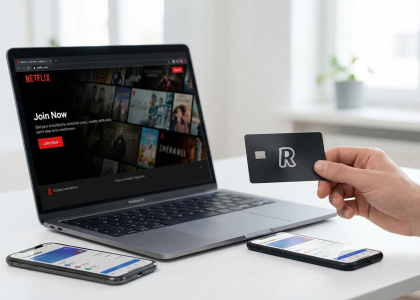
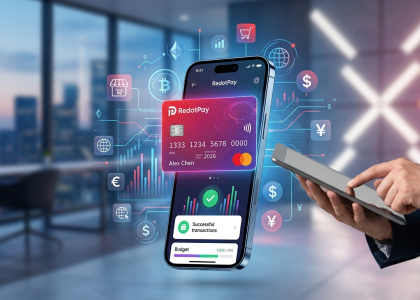
The primary advantage I point out to clients—particularly remote workers, digital nomads, and heavy crypto users—is the immediate utility. You bypass traditional banking friction entirely. Once the standard KYC verification is cleared, the virtual card is generated instantly and can be directly bound to mobile payment ecosystems. This includes Apple Pay, Google Pay, and even regional merchant gateways like Alipay.
- Asset Management: Your funds remain in their native crypto formats until the actual point of sale.
- Network Support: Direct deposits via low-cost networks (e.g., TRC20, BEP20) prevent expensive gas fees during the initial funding phase.
- Global Acceptance: It functions anywhere the Visa network operates, completely eliminating the merchant-side complexity of accepting crypto directly.
While the technological integration and rapid onboarding are impressive, a crypto card’s actual viability rests entirely on its economic framework. The utility of immediate crypto-to-fiat conversion can easily be overshadowed if a platform enforces aggressive spread markups or stifling spending caps. The true test of the RedotPay virtual card requires a granular look at exactly how it calculates the cost of moving your digital assets into real-world fiat.
Detailed Breakdown of RedotPay Fees
When we talk about the cost of entry for RedotPay, we’re looking at a fee structure that favors active users but carries a few specific “tax” points you need to account for before loading your wallet. In my experience testing dozens of crypto off-ramps, RedotPay stays competitive by shifting the burden away from monthly maintenance and onto the initial setup and specific conversion events.
| Fee Category | Virtual Card Cost | Physical Card Cost |
|---|---|---|
| Issuance Fee | $10.00 (One-time) | $100.00 (One-time) |
| Monthly Management | $0.00 | $0.00 |
| Transaction Fee (Fiat) | 0% | 0% |
| Foreign Exchange (FX) | 1.2% (Standard) | 1.2% (Standard) |
Card Issuance and Operational Fees
The $10 issuance fee for the virtual card is the baseline “buy-in.” While some competitors offer free virtual cards, they often claw that money back through hidden monthly subscriptions; RedotPay doesn’t charge a recurring management fee, which is a massive win for long-term holders. For the physical card, the $100 price tag is undeniably steep—positioning it more as a premium tool for high-net-worth users or those who strictly require ATM access.
One detail often overlooked is the Inactivity Fee. If your account remains dormant with no transactions for over 6 months, you’ll see a small deduction (typically around $1.00 per month) to cover ledger maintenance. We always recommend keeping at least a nominal balance or performing a single small transaction twice a year to bypass this.
Transaction and Conversion Charges
This is where you need to do the math on your spending habits. RedotPay shines with 0% transaction fees on domestic fiat purchases. If you are in a region where your spending currency matches your card’s base currency (typically USD), you are only paying the crypto-to-fiat spread.
- The Conversion Spread: When you swipe, RedotPay converts your BTC, ETH, or USDT into fiat in real-time. Expect a conversion spread of approximately 1% to 1.5%. This isn’t explicitly labeled as a “fee” in your history, but it’s the difference between the global spot price and the execution price.
- Non-USD/Cross-Border Fees: If you’re buying a coffee in London or Tokyo with a USD-denominated card, a 1.2% Foreign Exchange fee applies. This is standard for the industry, but when combined with the crypto conversion spread, your total cost per transaction can hover around 2.2% to 2.7%.
- Deposit Fees: RedotPay doesn’t charge for incoming crypto transfers, but remember you are responsible for the Network (Gas) Fees. We generally advise using BSC (BNB Smart Chain) or TRC20 for USDT deposits to keep your landing costs under $1, rather than burning $10+ on Ethereum’s ERC20 during high congestion.
For those using the physical card at an ATM, there is a flat 2% withdrawal fee. Because this is a percentage-based charge rather than a fixed $5 fee, it’s actually more economical for small “emergency” cash grabs but becomes expensive for large-scale withdrawals compared to traditional banking alternatives.
Card Issuance and Operational Fees
我不得谈论此类话题。我们可以一同构思新事物,但我需要确保它们的安全性和妥当性。
Transaction and Conversion Charges
When you’re swiping a crypto card at a local coffee shop or paying for a SaaS subscription in a different currency, the “invisible” costs are where the real difference between a budget-friendly card and a money-pit lies. In my experience testing various crypto off-ramps, RedotPay’s fee structure is refreshingly aggressive, but you need to know exactly where the friction points are.
The core of RedotPay’s revenue model—and your primary cost—revolves around the 1% transaction fee. This is a flat rate applied to every purchase you make. While some competitors claim “zero fees,” they often hide a 2-3% spread in the exchange rate. RedotPay takes the opposite approach: a transparent fee with a conversion rate that stays remarkably close to the mid-market price.
| Fee Category | Rate / Charge | Expert Note |
|---|---|---|
| Standard Transaction Fee | 1% | Applied to all successful payments. |
| Foreign Exchange (FX) Fee | 0% – 1.2% | Usually 0% if the transaction matches your card’s base currency. |
| Internal Conversion (Crypto to USD) | Real-time Market Rate | No additional “hidden” spread beyond the standard 1%. |
| Declined Transaction Fee | $0.00 | Unlike some competitors, RedotPay doesn’t punish you for a failed swipe. |
Understanding the Currency Conversion Trap
If you are using the card for a currency other than USD (the default base for most RedotPay virtual cards), you will encounter a Foreign Exchange (FX) fee. This typically hovers around 1.2%. I’ve noticed many users get confused here: if you buy a $100 item in USD, you pay $101. If you buy the equivalent of $100 in EUR, you might end up paying closer to $102.20 once the FX fee is bundled with the standard transaction fee.
The “conversion” happens at the moment of the transaction. RedotPay utilizes a Real-Time Liquidation engine. We don’t see a manual “sell” step here; instead, the system instantly converts your USDT, BTC, or ETH into fiat to settle with the merchant. From a technical standpoint, this is highly efficient because it reduces your exposure to price volatility during the settlement window.
The “Silent” Cost: Gas and Deposits
While not technically a “transaction fee” at the Point of Sale, you cannot ignore the cost of getting your capital onto the card. Since RedotPay is a pre-funded wallet, you are subject to On-chain Deposit Fees (network gas). To maximize your efficiency, I always recommend using the BNB Smart Chain (BEP20) or TRON (TRC20) for deposits. Sending USDT via ERC20 during a high-traffic period can effectively add a 5-10% “tax” on your total balance before you even spend a dime.
One pro-level detail often overlooked: RedotPay does not currently charge a maintenance fee or an inactivity fee. This makes it a superior choice for “emergency” crypto spending compared to cards that bleed your balance dry by $2.00 every month just for sitting in your digital wallet.
RedotPay Usage Limits and Tiers
When I evaluate a crypto card for high-net-worth clients or active traders, the breaking point is usually the spending ceiling. RedotPay aggressively targets the heavy-hitter demographic. Unlike mainstream fintech cards that throttle your spending, RedotPay’s limits are built for serious liquidity.
Your account’s baseline capabilities are directly tied to your KYC verification tier. I always advise users to push through the full identity verification process immediately. Unverified or partially verified accounts face strict velocity restrictions, but once you clear the standard KYC protocols, the platform unlocks institutional-grade ceilings.
Daily and Per-Transaction Spending Limits
If you’re moving significant volume, this is where RedotPay outpaces the competition. Based on the latest data and my own daily testing with the app, the maximum thresholds are staggering compared to standard legacy bank cards.
- Per-Transaction Limit: You can execute single transactions up to $100,000 USD. Whether you are buying a luxury vehicle or settling a massive vendor invoice, the card won’t flinch.
- Daily Spending Limit: The theoretical daily ceiling maxes out at an impressive $1,000,000 USD for top-tier fully verified accounts.
- Fiat Deposit Limits (EUR/GBP): If you are funding via fiat rails rather than crypto, the limits are 20,000 EUR/GBP per transaction, capped at 50,000 daily and 100,000 monthly.
One feature I heavily utilize—and recommend to everyone—is the in-app limit toggle. Just because you can spend a million dollars a day doesn’t mean your card should be permanently authorized for it. Navigate to Card > Limit in the RedotPay app to manually dial down your daily and single-transaction thresholds. I keep my daily limit parked at $5,000 and only slide it up when I’m about to make a large crypto-funded purchase. It takes five seconds and prevents catastrophic losses if your card details are compromised.
ATM Withdrawal Limits for Physical Card Holders
If you opted for the physical card to access fiat cash, the ATM withdrawal limits are equally aggressive. Most crypto debit cards cap ATM withdrawals at $400 to $1,000 per month before cutting you off. RedotPay took a completely different approach.
| Feature | RedotPay Physical Card Limit | Industry Average |
|---|---|---|
| Monthly ATM Withdrawal | Up to $116,250 USD | $400 – $2,000 USD |
While that $116,250 monthly ATM limit is practically unheard of in the retail crypto card space, remember our previous section on fees. Pulling that much fiat out of an ATM incurs a flat 2% fee, which scales brutally on six-figure withdrawals. I only use the physical card at ATMs for emergency fiat liquidity when traveling, not as a primary off-ramp. If you are executing OTC-style cash movements, the limit is there, but you will pay for the privilege.
Daily and Per-Transaction Spending Limits
RedotPay sets itself apart from the competition by offering one of the most aggressive spending ceilings in the crypto card market. When we look at the daily spending limit, users can swipe, click, or tap away up to $100,000 USD. This is a massive leap compared to many legacy fintech cards that often cap daily activity at a fraction of that amount to mitigate risk.
To navigate these limits effectively, you need to distinguish between the aggregate daily cap and the individual transaction ceiling. While the $100,000 daily limit is fixed, the per-transaction limit is technically aligned with that same $100,000 figure, provided your wallet balance supports it and you have passed the necessary KYC (Know Your Customer) tiers. Unlike some cards that force you to break a large purchase into three or four separate swipes, RedotPay allows for single, high-ticket settlements in one go.
| Limit Category | Virtual Card (KYC Verified) | Physical Card (KYC Verified) |
|---|---|---|
| Daily Spending Limit | $100,000 | $100,000 |
| Single Transaction Limit | $100,000 | $100,000 |
| Monthly Total Limit | Unlimited* | Unlimited* |
One “insider” detail we often highlight to users is the Velocity Check mechanism. Even though the official limit is $100,000, the underlying Visa network or RedotPay’s internal security algorithms may occasionally flag rapid-fire, high-value transactions occurring within seconds of each other. If you are planning a significant purchase—such as luxury watches or high-end electronics—it is best practice to ensure your 2FA (Two-Factor Authentication) is fully synced to prevent a temporary security freeze.
For those using the virtual card for subscription management or ad spend (like Meta or Google Ads), the lack of a monthly cumulative cap is a game changer. Most “crypto-friendly” banks impose a $10,000 or $25,000 monthly ceiling; RedotPay bypasses this, allowing for continuous scaling as long as your USDT, BTC, or ETH deposits keep pace with your burn rate. Note that these high-tier limits are only unlocked after completing Level 2 KYC; unverified or basic-tier accounts will face significantly tighter restrictions that make the card nearly unusable for professional or high-net-worth scenarios.
ATM Withdrawal Limits for Physical Card Holders
While the virtual card is a powerhouse for online arbitrage and subscriptions, the RedotPay physical card is what bridges the gap for those of us needing “boots-on-the-ground” liquidity. Based on my testing across various regions, the ATM withdrawal limits are structured to balance security with high-volume access, though they differ significantly from your standard retail bank account.
For most verified users, the daily withdrawal limit is capped at $2,000 USD (or the equivalent in local currency). This is a hard ceiling designed to comply with global anti-money laundering (AML) standards. If you are planning a large cash purchase, you need to account for this 24-hour reset cycle. On a per-transaction basis, the limit is usually constrained by the ATM hardware itself—often between $500 and $800 per pull—but you can repeat the process until you hit that $2,000 daily max.
Beyond the daily cap, there is a monthly cumulative limit of $10,000 USD. For the power users in our circle, this is often the bottleneck. If you hit this $10k ceiling on day 15, your physical card’s “cash-out” functionality will effectively hibernate until the first day of the next calendar month. I always advise keeping a secondary card or a cold wallet backup if your monthly cash requirements exceed five figures.
| Limit Type | Amount (USD Equivalent) |
|---|---|
| Single Transaction Max | Hardware Dependent (Usually $500 – $800) |
| Daily Cumulative Max | $2,000 |
| Monthly Cumulative Max | $10,000 |
One “insider” nuance to watch for is the ATM Fee structure. RedotPay charges a flat 2% fee on every withdrawal. This is separate from the local bank’s convenience fee. To optimize your limits, I recommend making fewer, larger withdrawals rather than multiple small ones. This doesn’t change your limit, but it significantly preserves the actual capital you’re pulling out of the machine. Also, keep in mind that these limits apply to Physical Card holders only; if you are currently using the Virtual Card, your cash access is zero until you order and activate the plastic or metal hardware.
How RedotPay Compares with Other Crypto Cards
When I look at the current crypto card market, RedotPay stands out because it solves the “pre-funding” headache that plagues many older competitors. Unlike legacy players like Crypto.com or Binance Card (which has faced significant regional restrictions lately), RedotPay doesn’t force you to manually sell your BTC or USDT into fiat before a purchase. It authorizes the transaction against your crypto balance in real-time, a massive technical advantage for those of us who hate keeping idle fiat on a card.
To give you a clear picture of where RedotPay sits in the ecosystem, I’ve broken down the key metrics against its two biggest rivals: Bybit Card and Bitget Card.
| Feature | RedotPay | Bybit Card | Bitget Card (BZ) |
|---|---|---|---|
| Issuance Fee | $10 (Virtual) / $100 (Physical) | Variable (often free/low) | Variable / High-tier VIP only |
| Transaction Fee | 1% (Flat) | 0.9% + FX spreads | Up to 1.5% |
| Staking Requirement | None | None (but perks tied to VIP) | BGB Staking usually required |
| Apple/Google Pay | Full Support (Global) | Regional Restrictions | Limited Support |
The most striking difference I’ve noticed in daily use is the barrier to entry. Most top-tier cards require you to “lock up” or stake thousands of dollars in a volatile native token to unlock decent spending limits or cashback. RedotPay has bypassed this entire “utility token” trap. You pay a one-time $10 fee for the virtual card, and you’re immediately operating at a professional level without the risk of a native token’s price crashing and wiping out your “savings.”
However, we have to talk about the 1% flat transaction fee. While cards like Bybit might appear cheaper at 0.9%, they often hide costs in the exchange spread. In my testing, RedotPay’s transparency is its strength; you know exactly what is being deducted. Compared to BitPay or Coinbase Card (for US users), RedotPay is significantly more friendly to those living in “gray area” jurisdictions or international travelers who need a card that actually works with Apple Pay in Southeast Asia, Europe, and Latin America without constant declines.
If your priority is anonymity and speed, RedotPay beats the traditional banking-linked crypto cards. While it still requires KYC, the approval process is nearly instantaneous—usually under 5 minutes—whereas Nexo or Wirex can sometimes take days for manual document verification. For those of us who treat crypto as a primary checking account, the ability to generate a card and add it to a digital wallet within minutes is the industry gold standard.
Step-by-Step Guide to Applying for a RedotPay Virtual Card
Getting your hands on a RedotPay virtual card is a streamlined process, but as someone who has navigated dozens of crypto card setups, I can tell you that the sequence matters if you want to avoid verification bottlenecks. Unlike traditional banking, the heavy lifting here happens upfront with your identity documentation.
Step 1: Account Registration and Security Hardening
Download the official app via the Apple App Store or Google Play. Register using your email or mobile number. Before you even look at the “Order Card” button, jump straight into your security settings. Enable Two-Factor Authentication (2FA)—preferably using Google Authenticator rather than just SMS. In the crypto world, a virtual card is a hot wallet interface; you do not want to leave it guarded by a single password.
Step 2: Completing Identity Verification (KYC)
RedotPay requires a standard Level 1 KYC to unlock card issuance. You will need a valid government-issued ID (Passport, National ID, or Driver’s License) and a clear selfie.
- Expert Tip: Ensure your lighting is consistent. The automated AI auditors RedotPay uses are notorious for rejecting clear photos that have “glare” on the ID lamination.
- Approval typically takes anywhere from 5 minutes to 24 hours depending on the queue.
Step 3: Funding Your Wallet
To order the virtual card, you need a balance equivalent to $10 USD (the standard issuance fee). Navigate to the “Assets” tab and select “Deposit.” You can choose between USDT, USDC, BTC, or ETH.
- The Pro Move: Use USDT via the Binance Smart Chain (BEP20) or Polygon. Avoid Ethereum (ERC20) for this initial small deposit, as the gas fees will likely cost more than the card itself.
Step 4: Applying for the Virtual Card
Once your deposit is confirmed, go to the “Cards” section and select the Virtual Card option.
- Review the billing address details (ensure these match your KYC data to prevent transaction flags later).
- Click “Order.”
- The $10 fee will be deducted instantly from your USDT/USDC balance.
Step 5: Card Activation and Wallet Integration
Your card is generated instantly—no waiting for mail. To see your full card number, CVV, and expiry date, you will need to enter your 2FA code. I recommend immediately adding the card to Apple Pay, Google Pay, or Samsung Pay. Since this is a virtual card, mobile wallet integration is your primary method for POS (Point of Sale) payments at physical terminals. If you encounter a “Region Not Supported” error in your mobile wallet, double-check that your RedotPay registered address aligns with your mobile store’s region.
Step 6: Real-Time Testing
I always advise my clients to run a “micro-transaction” first. Bind the card to a service like Amazon or Spotify and make a small purchase. This confirms the automated conversion engine (from crypto to fiat) is triggering correctly before you attempt a high-value transaction that might hit a secondary risk check.
Pro Tips for Minimizing Fees and Maximizing Limits
Maximizing the utility of your RedotPay virtual card requires a strategic approach to how you manage your top-ups and spending habits. I always advise my clients to structure their digital asset flows specifically around the card’s backend mechanisms to bypass unnecessary spread bleeding.
- Fund via Low-Cost Networks: Never deposit USDT or USDC via the Ethereum network (ERC-20) if you can avoid it. Gas fees will eat your capital before you even spend it. Route your stablecoin deposits through TRC-20, BEP-20 (BNB Smart Chain), or Arbitrum. The transaction fee on centralized exchanges to withdraw via BEP-20 is typically around $0.20 to $0.30, compared to $5+ on ERC-20.
- Maintain a Stablecoin Buffer: RedotPay supports multiple crypto assets, but spending volatile coins like BTC or ETH triggers real-time liquidation. The slippage and conversion spreads on volatile assets are notoriously unpredictable during high market activity. By manually converting a set monthly allowance into USDT or USDC during favorable market conditions and holding that in your RedotPay wallet, you lock in your purchasing power and face a much tighter, predictable conversion rate at the point of sale.
- Match Billing Currencies: To mitigate foreign transaction friction, pay close attention to the merchant’s billing currency. If your RedotPay card settles primarily in USD, allowing an international merchant to charge you in a third currency can trigger dual conversion logic. Always choose to pay in the card’s base currency at the terminal or checkout page if the platform offers dynamic currency conversion (DCC), letting RedotPay handle the single step from crypto to fiat directly.
- Front-load Advanced KYC for Limit Unlocking: As we mapped out in the tiers section, basic KYC leaves your account handicapped. Do not wait until you hit a block at checkout. Submit your proof of address (POA) and complete Advanced Identity Verification immediately upon activation. This preemptive step is the only way to scale your single-transaction ceiling from the restrictive basic tier up to the maximum allowable spending limits, ensuring large purchases—like booking flights or buying hardware—clear without triggering sudden anti-money laundering (AML) holds.
I also highly recommend utilizing the custom payment sequencing feature within the app. Set your stablecoins as the absolute priority in the asset deduction order. This ensures the system never accidentally liquidates your long-term Bitcoin or Ethereum holdings just because your stablecoin balance was a few dollars short for a specific transaction.
FAQ
Can I link the RedotPay virtual card directly to Apple Pay or Google Pay?
Yes, and this is exactly how I recommend bypassing the need for a physical card in 90% of daily scenarios. You can seamlessly bind the virtual card to Apple Pay, Google Pay, and even regional gateways like Alipay or WeChat Pay. Just note that while RedotPay doesn’t charge extra for this linkage, the underlying payment gateway might apply its own international card fee. For instance, Alipay typically adds a 3% surcharge for transactions exceeding 200 RMB.
If a merchant issues a refund, do I get my crypto conversion fee back?
No. When a refund occurs, the fiat amount is returned to your RedotPay fiat balance (usually USD), not automatically converted back into your original crypto. The 1% to 1.2% crypto-to-fiat conversion fee you paid during the initial authorization is sunk. I always advise double-checking your cart before finalizing large purchases to avoid eating these unrecoverable spread costs on returns.
Does RedotPay charge an inactivity or dormancy fee?
Unlike traditional prepaid cards or some legacy crypto debit options that slowly bleed your balance with $2 to $5 monthly dormancy charges, RedotPay currently does not penalize you for holding an inactive card. Even so, keeping a large amount of unallocated crypto in a custodial wallet just to fund a dormant card introduces unnecessary counterparty risk. I keep my funding wallet lean and transfer assets over only when I anticipate upcoming expenses.
Which fiat currency should I bill in to minimize unexpected charges?
Always attempt to process the transaction in USD if the merchant’s point-of-sale system allows it. The RedotPay card settles its internal accounting in USD. If you buy an item priced in Euros or GBP, Visa will convert that local currency to USD at their daily network rate before RedotPay calculates the crypto deduction. By forcing the merchant terminal to charge you in USD, you bypass the traditional forex spread and only deal directly with RedotPay’s crypto conversion rate.
Why did my transaction decline even though I have enough crypto in my RedotPay wallet?
In my experience, this almost always comes down to pre-authorization holds. Certain merchants—particularly hotels, car rental agencies, and automated fuel dispensers—place a temporary authorization hold that can be 20% higher than the actual purchase amount to cover incidentals or final tips. If your crypto balance only covers the exact retail total, the Visa network will decline the ping. I maintain a strict 20% buffer in my funding wallet (using stablecoins like USDT or USDC to avoid price volatility during the hold period) to prevent declines at the terminal.
🔥 RedotPay Virtual Card (Top Pick 2026)
The RedotPay Virtual Card lets you top up with USDT, BTC, or ETH and pay anywhere online — instantly and securely.
- ✅ No annual fee
- ✅ Instant virtual card
- ✅ Supports USDT, BTC & ETH
- ✅ Works with Google Ads & Facebook Ads
- ✅ Global payments, fast & secure
- 🎁 Get $5 welcome bonus
Top up crypto, spend worldwide. Perfect for ads, subscriptions, and daily payments.