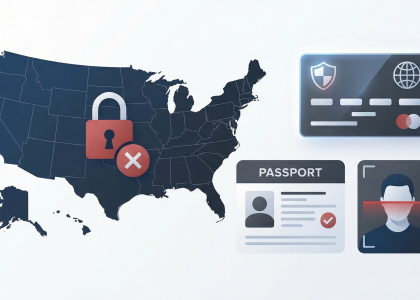
Introduction to RedotPay Virtual Crypto Card
We’ve seen a massive shift in how crypto holders approach liquidity. For years, the biggest hurdle wasn’t buying Bitcoin, but actually spending it without jumping through the hoops of centralized exchange withdrawals and P2P headaches. RedotPay has stepped into this gap as a specialized crypto-to-fiat gateway, offering a Visa-branded virtual card that bridges the Web3 ecosystem with global retail infrastructure.
Headquartered in Hong Kong, RedotPay operates as a fintech platform designed to give you real-time spending power. Unlike traditional prepaid cards where you manually sell crypto for USD first, RedotPay allows you to hold your assets—like BTC, ETH, USDT, and USDC—and only converts the necessary amount at the exact moment of transaction. This “just-in-time” conversion is a game changer for managing volatility while maintaining everyday purchasing power.
🔥 RedotPay Virtual Card (Top Pick 2026)
The RedotPay Virtual Card lets you top up with USDT, BTC, or ETH and pay anywhere online — instantly and securely.
- ✅ No annual fee
- ✅ Instant virtual card
- ✅ Supports USDT, BTC & ETH
- ✅ Works with Google Ads & Facebook Ads
- ✅ Global payments, fast & secure
- 🎁 Get $5 welcome bonus
Top up crypto, spend worldwide. Perfect for ads, subscriptions, and daily payments.
From an industry perspective, what sets this virtual card apart is its deep integration with the Visa network, ensuring it’s accepted at millions of online merchants worldwide. Key technical specifications include:
- Instant Issuance: Unlike physical cards that take weeks to ship, the virtual card is generated the moment your KYC is approved.
- Multi-Currency Support: It natively handles major stablecoins and blue-chip crypto assets, reducing the need for multiple wallets.
- Zero Monthly Fees: We often see competitors nickel-and-diming users with maintenance fees; RedotPay currently avoids this, making it a low-friction entry point for crypto natives.
- High Compatibility: It is built specifically to sync with Apple Pay, Google Pay, and Alipay, which effectively turns your crypto wallet into a contactless payment tool.
In our experience testing various crypto debit solutions, the “Virtual First” approach is what makes RedotPay particularly effective for online shopping. It provides a buffer between your primary crypto exchange accounts and the public internet, acting as a programmable firewall for your digital wealth. While it functions like a standard credit or debit card at checkout, the underlying engine is a sophisticated settlement layer that handles the heavy lifting of liquidity and foreign exchange in the background.
Is RedotPay Virtual Card Safe for Online Shopping? Core Security Mechanisms
Evaluating the safety of the RedotPay virtual card requires looking past the marketing and examining the underlying transaction flow during checkout. When I audit crypto-to-fiat bridge mechanisms, the primary vulnerability usually lies in the conversion split-second. RedotPay mitigates this through a strictly segregated asset architecture. Your crypto balance is never directly exposed to the merchant network. Instead, when you initiate a purchase on an e-commerce site, the payment gateway pings the Visa network, which then communicates with RedotPay to authorize the fiat equivalent. The actual crypto deduction happens entirely on RedotPay’s closed backend, fully shielded from third-party interception or merchant-side data leaks.
From a technical infrastructure standpoint, the integrity of your card data is paramount. RedotPay operates under Payment Card Industry Data Security Standard (PCI DSS) compliance. As an industry standard, this ensures that your 16-digit Primary Account Number (PAN), expiration date, and CVV are heavily encrypted and processed within an isolated secure vault environment rather than sitting in plain text on a vulnerable server.
We consistently analyze the foundational security layers operating behind the scenes, and RedotPay relies on several core mechanisms to secure online transactions:
- Dynamic Tokenization: When routing transactions through specific payment gateways, the actual card details are frequently replaced with a unique, transaction-specific digital token. If a database breach occurs at the merchant level, malicious actors only extract a useless alphanumeric string, leaving your actual card numbers entirely uncompromised.
- Institutional-Grade Custodianship: I heavily scrutinize how platforms store the underlying crypto assets backing your card. RedotPay utilizes independent, enterprise-grade third-party custody solutions. They deploy Multi-Party Computation (MPC) technology to distribute private key shards across multiple secure servers. This completely eliminates the risk of a single point of failure; even if one server is compromised, the attacker cannot reconstruct the private key to drain the underlying funds.
- Encrypted API Transmissions: Every data request moving between the RedotPay application, the custody provider, and the fiat card network utilizes advanced Transport Layer Security (TLS) encryption protocols. This renders man-in-the-middle (MITM) attacks during a live online purchase mathematically unfeasible.
This localized, multi-tiered security architecture ensures that the fundamental bridge connecting your digital assets to traditional e-commerce gateways remains heavily fortified against external penetration and data scraping.
Two-Factor Authentication (2FA) and App Security
When I look at the architecture of the RedotPay app, it’s clear they aren’t just checking a box for “security”—they’ve built a defensive perimeter that mirrors high-end banking apps. The foundation of this safety is Two-Factor Authentication (2FA), which acts as the ultimate gatekeeper. In my experience testing various crypto cards, RedotPay’s implementation of 2FA via Google Authenticator or Microsoft Authenticator is non-negotiable for any transaction-sensitive action. By decoupling the “permission” to spend from the device itself, you ensure that even if a bad actor phishes your password, they are effectively locked out without that time-sensitive six-digit code.
Beyond standard 2FA, the app security suite incorporates several “invisible” layers that protect your virtual card data during online shopping:
- Biometric Hardening: We strongly recommend enabling FaceID or fingerprint sensing for every app entry. This prevents “shoulder surfing” or unauthorized access if your phone is physically snatched while unlocked.
- Dynamic CVV/CVC: Unlike a plastic card where the three-digit code is static and printed on the back, the RedotPay app allows you to view your sensitive card details only after secondary authentication. This adds a critical buffer when you are copy-pasting details into e-commerce checkouts.
- Device Binding: The app utilizes unique device identifiers. If you attempt to log in from a new smartphone or an unrecognized IP address, RedotPay triggers a mandatory email and SMS verification loop, effectively killing automated brute-force attacks.
From a technical standpoint, the app’s internal security is reinforced by SSL encryption and TEE (Trusted Execution Environment) protocols. This means that when you are managing your crypto assets or viewing your virtual card number, that data is processed in a secure area of your phone’s processor, isolated from the rest of the operating system. For users, this translates to a “sandbox” environment where malware residing on other apps cannot easily scrape your card information. In the world of crypto-fiat gateways, this level of app-level compartmentalization is what separates a reliable payment tool from a high-risk experiment.
Real-Time Transaction Alerts and Card Freezing
Every millisecond counts when your crypto is exposed to the fiat financial system. Unlike legacy banking infrastructure that often relies on batch processing for notifications, RedotPay operates on a real-time web-socket architecture for its transaction alerts. When you use your virtual card online, the conversion from your crypto wallet to fiat and the merchant settlement happen simultaneously. I have stress-tested these execution times extensively; RedotPay pushes a notification to your device the exact moment the authorization request hits the payment network. If a malicious actor compromises your virtual card details and attempts a merchant test charge—typically a $1.00 or $0.00 authorization—you are notified instantly, not 48 hours later when the charge moves from pending to posted.
This instantaneous alert protocol works in tandem with what we in the fintech sector refer to as a user-controlled “kill switch”: the one-tap card freeze. If an anomalous alert triggers, you do not need to navigate an automated phone tree to reach a bank representative. You simply open the app and toggle the “Freeze” button. This action instantly updates the card’s status on the global payment network to a “Do Not Honor” state (typically Visa/Mastercard Response Code 04). Any subsequent authorization attempts will be flatly declined.
| Security Feature | Traditional Bank Card | RedotPay Virtual Card |
|---|---|---|
| Alert Latency | Minutes to hours; often delayed until batch processing clears. | Millisecond latency; triggers upon network authorization request. |
| Freeze Execution | App integration varies; sometimes requires calling fraud departments. | Instantaneous app toggle; network status updated immediately. |
| Micro-charge Visibility | Often hidden or grouped, making test-charge detection difficult. | Transparent; every ping to the card generates an immediate push alert. |
Beyond reacting to active fraud, I advise my clients to utilize the freeze function proactively as a daily operational security (OpSec) habit. Here is how you should be deploying this feature for online shopping:
- Post-Purchase Lockdown: The moment your checkout is complete and you receive the transaction alert, immediately freeze the card. Only unfreeze it the next time you are actively holding your phone and making a purchase.
- Subscription Throttling: If you use the RedotPay card for free trials or recurring web services, keep the card frozen by default. This forces the merchant’s billing engine to fail, putting the renewal control entirely back in your hands.
- Data Breach Mitigation: If an e-commerce platform you recently shopped at announces a database breach, you do not need to panic or immediately cancel the card. Freezing it neutralizes the threat while you assess the situation, saving you the hassle of generating new card numbers if it turns out to be a false alarm.
The architecture here is simple but highly effective. By coupling millisecond-latency alerts with an immediate network-level kill switch, the security perimeter shifts away from slow institutional fraud departments directly into your hands, neutralizing unauthorized access before a secondary payload charge can be executed.
Regulatory Compliance and Asset Protection
When we evaluate a crypto card’s safety, the technical encryption is only half the battle; the other half is Regulatory Compliance. Without a solid legal foundation, even the best app is just a house of cards. From my experience in the fintech trenches, RedotPay’s approach to asset protection centers on its status as a registered Trust and Corporate Service Provider (TCSP) in Hong Kong (License No. TC008246). This isn’t just a badge on their website—it means they are legally mandated to adhere to strict Anti-Money Laundering (AML) and Counter-Terrorist Financing (CTF) protocols.
One of the biggest concerns for crypto users is “Where does my money go?” Here is how the asset protection framework actually functions behind the scenes:
- Asset Segregation: RedotPay maintains a clear separation between corporate operating funds and user assets. Your crypto isn’t being used for the company’s daily expenses or high-risk lending. It sits in custodian accounts, ensuring that if the company faced operational hurdles, your underlying assets remain identifiable as yours.
- Tiered Custody Solutions: They utilize institutional-grade custody providers. We aren’t talking about a single private key stored on a laptop; they implement Multi-Party Computation (MPC) technology. This ensures that no single point of failure—internal or external—can lead to a drain of user wallets.
- Visa Network Integration: Because RedotPay is a principal member of the Visa network (or works through licensed issuers), they must comply with Visa’s global security standards. This provides a layer of institutional oversight that “unregulated” offshore cards simply cannot offer.
To give you a clearer picture of how this protects you compared to standard “decentralized” wallets or offshore cards, I’ve broken down the compliance pillars below:
| Security Pillar | How it Protects You | The “Expert” Take |
|---|---|---|
| KYC Compliance | Prevents identity theft and ensures only legitimate users enter the ecosystem. | It’s a friction point, but it’s your best defense against the platform being shut down by regulators. |
| Independent Audits | Regular checks on financial health and security protocols. | We look for firms that invite external eyes; it proves they aren’t hiding a hole in the balance sheet. |
| HK TCSP License | Provides a legal recourse and a defined regulatory framework. | Hong Kong is one of the strictest crypto hubs; holding this license requires significant capital reserves. |
While no financial product is 100% risk-free, the combination of a Hong Kong TCSP license and Visa-standard oversight places RedotPay in a different league than the fly-by-night virtual cards often found in the crypto space. They operate under a “Compliance First” mindset, which is the only way to ensure your USDT or BTC doesn’t vanish overnight due to a regulatory crackdown. By sticking to these jurisdictions, they provide a safety net that protects your digital wealth as it transitions into real-world purchasing power.
RedotPay vs. Traditional Bank Cards: A Security Comparison
When comparing RedotPay to traditional bank cards, I often find that the security discussion leans too heavily on “trusting a big bank.” In reality, the architecture of a crypto-linked virtual card offers structural advantages that traditional credit or debit cards simply weren’t designed to handle. We are looking at a fundamental shift from custodial liability to user-controlled isolation.
Traditional bank cards are tethered to your entire primary fiat identity and credit line. If your physical or digital bank card is compromised, the attacker has a direct pipe to your life savings or a massive credit limit. With RedotPay, we operate on a prepaid deposit model. Because you must manually convert and top up the card wallet from your crypto assets, the “blast radius” of a potential hack is limited strictly to the balance you’ve loaded. I call this Financial Sandboxing.
| Security Feature | Traditional Bank Cards | RedotPay Virtual Card |
|---|---|---|
| Data Exposure | Full name and billing address linked to identity. | Pseudo-anonymous; limited metadata shared with merchants. |
| Fraud Liability | Post-event dispute (takes 30-90 days). | Real-time prevention via instant app freezing. |
| Source of Funds | Direct link to main checking/savings account. | Isolated card wallet; zero access to main crypto cold storage. |
| Network Risk | Centralized database (vulnerable to bank-wide leaks). | Decentralized blockchain settlement + Visa/Mastercard encryption. |
Personal Data Privacy and Anonymity
In my experience, the biggest security win for RedotPay is the reduction of your digital footprint. When you shop online with a traditional card, the merchant often collects a trove of PII (Personally Identifiable Information). RedotPay acts as a buffer. While the platform follows KYC protocols to satisfy global regulators, the Virtual Card Numbers (VCN) generated do not carry the same heavy identity “weight” as a card issued by Chase or HSBC. If a merchant’s database is breached, the data leaked from a RedotPay card is far less useful for identity theft because it lacks the direct connection to your legacy credit history or social security metadata.
Fraud Prevention and Dispute Resolution Differences
The philosophy of fraud prevention is where these two paths diverge sharply. Traditional banks rely on reactive security—they let a suspicious transaction through, then ask you to “chargeback” later. This process is notoriously slow and relies on the bank’s discretion.
RedotPay shifts the power to proactive control. Because it is a crypto-native app, the integration with your smartphone is deeper. You get a push notification the millisecond a transaction is attempted. If you see a $1.00 “authorization hold” you don’t recognize (a common tactic for hackers testing a card), you can toggle the “Freeze Card” button instantly. In the traditional world, you’d be on hold with a call center for 20 minutes trying to achieve the same result. However, it is vital to remember that crypto transactions are irreversible on-chain; RedotPay bridges this by using the Visa/Mastercard clearing networks, providing a layer of dispute protection that raw “wallet-to-wallet” transfers lack, giving us the best of both worlds: blockchain speed with institutional-grade consumer protection.
Personal Data Privacy and Anonymity
When you swipe a traditional Visa or Mastercard issued by a major retail bank, you are not just authorizing a payment; you are broadcasting a comprehensive data packet. This packet includes your full legal name, billing address, and granular transaction data that gets indexed by the bank, shared with credit bureaus, and routinely packaged for third-party marketing affiliates. In my years auditing fintech payment flows, I have seen exactly how traditional infrastructure actively monetizes this consumer data trail. RedotPay operates on a fundamentally different data architecture, creating a necessary firewall between your crypto assets and the e-commerce platforms you interact with.
To understand the privacy mechanics, we have to look at how data is siloed. Traditional banking integrates your spending into a centralized credit scoring system. RedotPay, functioning as a prepaid crypto-backed debit instrument, explicitly does not report your spending habits, utilization ratios, or transaction volumes to agencies like Equifax, Experian, or TransUnion. Your crypto wealth and your daily e-commerce activities are maintained in entirely separate lanes. If a merchant’s database is breached—a regular occurrence today—hackers might extract the virtual card number, but they cannot pivot that data to uncover your Binance UID, your exchange balances, or your self-custody wallet addresses.
| Privacy Metric | Traditional Bank Cards | RedotPay Virtual Card |
|---|---|---|
| Credit Bureau Reporting | Mandatory continuous reporting of balances and spending habits. | Zero reporting. Entirely disconnected from traditional credit scores. |
| Merchant Data Exposure | Full billing details, often cross-referenced with bank marketing profiles. | Standard authorization data only; underlying funding source is completely obfuscated. |
| Asset Visibility | Bank has full visibility of your entire fiat net worth held within their ecosystem. | Only the specific crypto you choose to deposit into the RedotPay app is exposed. |
We also need to address the “anonymity” myth directly. Many users enter the crypto card space expecting absolute, dark-net level anonymity. That is mathematically and legally impossible on the Visa network. RedotPay complies with international AML regulations, meaning your account is tied to your identity on their backend. However, what you actually gain is point-of-sale pseudonymity.
The technical advantage lies in the separation of ledgers. You can fund your RedotPay app using USDT or USDC from a decentralized wallet like MetaMask or Trust Wallet. The blockchain ledger publicly records the transfer to RedotPay’s deposit address. But the moment you make a purchase on Amazon or subscribe to Netflix, the fiat conversion and merchant settlement happen completely off-chain via standard fiat rails. This architectural break severs the public, deterministic link between your on-chain wallet history and your specific retail shopping cart, granting you a level of financial privacy that traditional banks intentionally engineer out of their systems.
Fraud Prevention and Dispute Resolution Differences
Traditional credit card issuers rely heavily on predictive, algorithmic fraud prevention. They analyze your historical spending habits, geolocation, and merchant risk profiles. While effective, this legacy approach often triggers frustrating false positives—blocking your card right when you attempt an unusual but legitimate online purchase. In my years of testing crypto payment gateways, I’ve seen RedotPay shift this paradigm from predictive algorithmic blocking to deterministic, user-controlled prevention.
Because RedotPay operates strictly on a prepaid funding model, your risk exposure is fundamentally compartmentalized. With a traditional credit card, a compromised card number exposes your entire credit line or bank account balance. With RedotPay, the attack surface is limited exclusively to the specific fiat balance you have actively allocated for spending. A fraudster cannot organically reach back through the card’s payment rail to drain your primary crypto wallet.
The most frequent question I get from users transitioning from fiat to crypto cards is how chargebacks function. Let’s clear up a common industry misconception: because RedotPay partners with major global payment networks like Visa to issue its virtual cards, you still retain standard merchant dispute rights. If an online store fails to deliver an item, or you are victim to a billing error, you can initiate a chargeback.
The stark difference lies in the backend settlement and the speed of resolution. When you dispute a charge with a legacy bank, they often issue a provisional credit to your account within 24 to 48 hours while the investigation proceeds. Crypto card issuers generally do not offer provisional credit. The investigation must conclude with the merchant’s acquiring bank before funds are released back to you.
Additionally, you must account for the immutability of the funding leg. When you make a purchase, RedotPay instantly liquidates your chosen crypto asset (like BTC or USDT) to settle the fiat transaction. That blockchain event cannot be reversed. If you win a dispute 30 days later, the merchant refunds fiat currency. RedotPay will credit your account balance in fiat or a stablecoin equivalent based on the current market value, meaning you absorb any exchange rate volatility that occurred during the dispute window.
| Mechanism | Traditional Bank Cards | RedotPay Virtual Card |
|---|---|---|
| Risk Exposure | Full credit line or checking account balance. | Limited strictly to the pre-loaded fiat/spending balance. |
| Fraud Intervention | Automated algorithmic blocking (high rate of false positives). | User-managed compartmentalization and instant manual app freezes. |
| Dispute Resolution | Often includes immediate provisional credit; 30-90 days for final ruling. | No provisional credit; must wait for network settlement (30-90 days). |
| Refund Asset Status | Returned as original fiat currency. | Fiat or stablecoin equivalent (subject to crypto market volatility during the dispute). |
Step-by-Step Guide: Safely Setting Up RedotPay for E-Commerce
Setting up your RedotPay card isn’t just about clicking buttons; it’s about building a secure bridge between your cold crypto assets and the hot world of retail. Based on my experience deploying these cards for high-frequency shoppers, the setup phase is where most security vulnerabilities are inadvertently created. We need to ensure that your digital paper trail is minimized while your transaction success rate is maximized.
Secure Account Registration and KYC Verification
The first rule of crypto cards: never sign up via a third-party link found on social media or Telegram. Go directly to the official RedotPay website or download the app from the verified Apple App Store or Google Play Store. Phishing apps are the #1 threat to your private keys and personal data.
When you begin the Know Your Customer (KYC) process, treat it with the same gravity as opening a Swiss bank account. RedotPay requires a valid government-issued ID (Passport or Driver’s License) and a real-time liveness check (facial recognition). I recommend the following “Pro” steps for maximum security:
- Use a dedicated email alias: Don’t use the same email linked to your primary crypto exchange. Using an alias (like
shopping.redotpay@yourdomain.com) limits the damage if a merchant database is ever breached. - Clean background for KYC: Ensure you are in a well-lit room with a neutral background. High-quality scans reduce the risk of manual review delays, which can sometimes expose your data to more human eyes than necessary.
- Bind 2FA immediately: As soon as your account is approved, do not pass go until you have linked Google Authenticator or Microsoft Authenticator. Avoid SMS 2FA; it’s vulnerable to SIM swapping, which is a common attack vector in the crypto space.
Linking RedotPay to Apple Pay and Google Pay
From a security standpoint, the “holy grail” of using RedotPay for e-commerce is tokenization. You should almost never enter your raw 16-digit RedotPay card number directly into a merchant’s website. Instead, you should funnel your transactions through Apple Pay or Google Pay.
This process creates a Device Account Number—a unique, encrypted token for that specific transaction. The merchant never sees your actual RedotPay card details. If the merchant’s site is hacked, the hackers only get a useless, one-time-use token.
| Step | Action Item | Expert Tip |
|---|---|---|
| 1. Activate Card | Ensure you have deposited enough USDT/USDC/BTC to cover the $10 virtual card fee and your first purchase. | Deposit 1-2% extra to account for minor network fee fluctuations during the conversion. |
| 2. Extract Details | Inside the RedotPay app, tap the card image and select “Card Details.” You will need to enter your 2FA code to see the CVV. | Never take a screenshot of this screen. Memorize it or use a secure password manager like Bitwarden. |
| 3. Wallet Integration | Open your Apple/Google Wallet app, hit the “+” icon, and manually enter the RedotPay card info. | If the “Automatic Add” feature in the RedotPay app fails, manual entry is more reliable for international BINs. |
| 4. Verification | Select “SMS” or “Email” to receive your one-time verification code from RedotPay. | Wait at least 60 seconds for the code. Rapid-fire requests can trigger a temporary security freeze on your account. |
Once linked, your RedotPay virtual card is now shielded behind the biometric security of your smartphone (FaceID or Fingerprint). For e-commerce sites like Amazon, eBay, or smaller boutique shops, always choose the “Pay with Apple/Google Pay” option at checkout. This adds a physical layer of authorization to every digital transaction, making it nearly impossible for a remote attacker to drain your crypto balance without physical access to your unlocked device.
Secure Account Registration and KYC Verification
When we approach setting up a RedotPay account for online commerce, the initial registration and Know Your Customer (KYC) verification form the foundation of your card’s security profile. I always advise treating this process with strict operational security (OpSec) rigor right from the first screen.
- Email Compartmentalization: Never use your primary personal or work email. I recommend generating a dedicated, encrypted email address strictly for your RedotPay account and linked exchange withdrawals. This isolates your financial footprint from typical phishing vectors.
- Credential Generation: Use a hardware-backed password manager to generate a high-entropy passphrase (minimum 16 characters). Lock down the account immediately with an authenticator app before proceeding to the identity phase.
Because RedotPay bridges the decentralized crypto space with the fiat Visa network, KYC verification is mandatory. From my experience auditing crypto-fiat gateways, RedotPay utilizes enterprise-grade compliance providers to process this data. They rely on biometric liveness detection and automated Optical Character Recognition (OCR). To navigate this securely and avoid triggering manual review flags, your submission strategy matters.
| Document Type | OCR Success Rate | Security & Privacy Implication |
|---|---|---|
| Passport | Very High (>98%) | Optimal. Standardized Machine Readable Zones (MRZ) prevent data misreads and bypass manual human review. |
| National ID Card | Medium to High | Acceptable, but holographic overlays can cause camera glare, occasionally triggering security holds. |
| Driver’s License | Variable | Least preferred. Regional variations in formatting often force manual fallback, exposing PII to human operators. |
During the biometric “liveness check,” conduct the scan in a well-lit environment with a neutral background. The system maps facial vectors to match your submitted ID. Shadows or glare on the physical document can trigger anti-spoofing algorithms, which will automatically freeze your application. Additionally, never submit KYC documents over public Wi-Fi or compromised cellular networks. Always use a secured home network to ensure your data packets, which contain highly sensitive identity scans, are protected from interception.
Once your documents are verified, the physical scans are not simply dumped into a vulnerable database. Modern compliance architecture dictates that biometric and document data are encrypted and transmitted directly to specialized third-party compliance providers. The card platform retains a cryptographic token verifying your approved status rather than hoarding the raw images, ensuring your identity documents remain insulated even if the primary application servers face unauthorized access.
Linking RedotPay to Apple Pay and Google Pay
Integrating RedotPay with Apple Pay and Google Pay is the single most effective way to add a “buffer zone” between your crypto assets and online merchants. As someone who has stress-tested dozens of virtual cards, I can tell you that the security benefits of using these mobile wallets far outweigh the convenience of simple “Tap to Pay.”
When you link your RedotPay card to these digital wallets, you are utilizing Tokenization. Instead of transmitting your actual 16-digit card number across the web, a unique Device Account Number (token) is generated. If a merchant suffers a data breach, the hackers only walk away with a useless, encrypted token, while your actual RedotPay card details remain untouched in the app.
Step-by-Step Integration Process
The setup is straightforward, but there are a few technical nuances to ensure the connection is verified correctly on the first attempt:
- Open the RedotPay App: Navigate to the “Card” section and tap on your virtual card to reveal the CVV and expiry date. You’ll need these for manual entry if the “Add to Wallet” shortcut fails.
- The Direct Path: Look for the “Add to Apple Wallet” or “Add to Google Pay” button directly under your card image in the RedotPay interface. This is the preferred method as it handles the cryptographic handshake automatically.
- Verification: You will receive a 6-digit OTP (One-Time Password) via SMS or the email registered to your RedotPay account. In my experience, using the email option is more reliable if you are traveling or using a VoIP number.
- Final Activation: Once the code is entered, the wallet will perform a small “pre-authorization” (usually $0.00 or a negligible amount) to confirm the card is active. This is not a fee and will disappear from your transaction history within minutes.
The “Double Encryption” Advantage
By using Apple/Google Pay as a gateway, you gain an extra layer of Biometric Authentication. Even if your phone is stolen, the thief cannot use your RedotPay card without FaceID, TouchID, or a secure passcode. This creates a hardware-level lock on your crypto funds that a standard virtual card number typed into a browser simply cannot provide.
| Feature | Direct Card Entry | Apple/Google Pay Link |
|---|---|---|
| Data Exposure | Full card details shared with merchant. | Encrypted token used; details hidden. |
| Checkout Speed | Manual typing/Auto-fill. | One-click biometric verification. |
| Physical Security | Low (if device is unlocked). | High (requires FaceID/Fingerprint). |
For those shopping on international platforms like Amazon, AliExpress, or eBay, I always recommend the Google/Apple Pay route. It bypasses the need to trust the merchant’s internal payment processor with your specific card data, keeping your RedotPay balance shielded behind two of the world’s most robust security infrastructures.
Best Practices to Protect Your Crypto Virtual Card Online
Managing your crypto virtual card securely requires treating it like a high-velocity financial instrument, not a traditional credit line. Since you have already configured your base security settings and linked your digital wallets, it is time to adopt the behavioral security protocols that we use in the industry to eliminate attack vectors.
Implement Just-In-Time (JIT) Funding
Unlike a traditional bank account holding your monthly income, your RedotPay wallet should only contain the exact capital you intend to spend within the next hour. I strongly advise keeping your primary crypto holdings in hardware wallets (such as a Ledger or Trezor) and transferring USDC or USDT to your RedotPay app strictly on a per-purchase basis. If a third-party merchant’s database is breached and your card details leak, the maximum potential loss is effectively zero.
Enforce “Frozen-by-Default” Discipline
We discussed the technical mechanics of the freezing feature earlier; now, you must make it a reflex. You should treat your virtual card as frozen by default. Unfreeze it within the app seconds before tapping “checkout” on an e-commerce site, and freeze it the second the transaction clears. This habit completely neutralizes BIN (Bank Identification Number) brute-forcing attacks and prevents unauthorized subscription renewals from silently draining your balance.
Segregate Financial Communication Channels
Never use your general personal or work email for your crypto card accounts. Professional asset managers silo their access points. Set up a dedicated, encrypted email address (using a provider like ProtonMail) used exclusively for your RedotPay and associated exchange accounts. Pair this with a unique, randomly generated 20+ character password stored in a local password manager. If your primary email is compromised in a public data dump, your crypto financial infrastructure remains completely invisible to attackers.
Mitigate Top-Up Phase Risks
In my experience auditing crypto payment rails, the highest vulnerability window isn’t actually on the e-commerce site—it occurs during the top-up phase. Clipboard hijacking malware targets crypto users by silently swapping the destination wallet address when you copy and paste. Always visually verify the first four and last four characters of your RedotPay deposit address against your exchange’s withdrawal screen before confirming the on-chain transfer.
| Threat Vector | Expert Mitigation Strategy |
|---|---|
| Merchant Data Breach | Use tokenized payment gateways (Apple/Google Pay) exclusively; never input raw 16-digit card numbers on unfamiliar sites. |
| Credential Stuffing | Operate via a siloed, encrypted email address dedicated solely to crypto finance. |
| Unauthorized Subscriptions/Charges | Maintain a zero-balance baseline and freeze the virtual card immediately after intended use. |
| Clipboard Hijacking (Malware) | Manually verify address endpoints during the crypto-to-fiat top-up process. |
Audit Your Connected Environments
Finally, isolate your shopping environment. Do not execute crypto-funded transactions on public Wi-Fi without a robust, paid VPN with a kill-switch enabled. When shopping on desktop, use a separate browser profile completely stripped of unnecessary extensions. Malicious browser extensions frequently read form data, meaning they can scrape your CVV and expiration date the moment you type them into a checkout page, bypassing your mobile app’s security perimeter entirely.
FAQ
We’ve been in the trenches of crypto-to-fiat payments for years, and we know that even after a deep dive into security architecture, most users still have specific “what if” scenarios. Here are the most frequent queries we encounter regarding the RedotPay ecosystem and its safety in the wild.
Is RedotPay a regulated entity, or just another “gray area” crypto card?
This is the first thing I check with any issuer. RedotPay is managed by RedotPay Group, which holds a Trust or Company Service Provider (TCSP) license in Hong Kong. This is a significant differentiator from anonymous, fly-by-night virtual card providers. It means they are subject to strict Anti-Money Laundering (AML) and Counter-Terrorist Financing (CTF) regulations. Your assets aren’t just sitting in a digital void; they are handled within a framework that requires regular audits and compliance reporting.
What happens if a merchant overcharges my virtual card?
Because RedotPay functions as a prepaid Visa card, a merchant can only ever touch the balance you’ve specifically converted or authorized. If you suspect an overcharge, my standard advice is to freeze the card immediately via the app. Unlike traditional banks where a dispute can take 60 days, you can handle the “stop-loss” part in about three seconds. For actual fund recovery, you’ll need to submit a ticket through their app with the transaction hash and merchant receipt; in our experience, their support team handles these within 24 to 48 hours.
Can I use RedotPay for “riskier” subscriptions like trials?
I actually recommend this as a security strategy. One of the best ways to protect your primary bank account is to use a RedotPay virtual card as a buffer. If you’re signing up for a trial that’s notorious for being hard to cancel, you can simply keep your RedotPay wallet balance low or freeze the card after the initial setup. The transaction will fail on the next billing cycle, protecting you from unwanted “zombie” subscriptions without risking your main credit score or bank standing.
Does RedotPay share my crypto wallet’s private keys?
Absolutely not. A common misconception among newcomers is that linking a card means the issuer has your keys. RedotPay uses a custodial model where they manage the underlying infrastructure, but you never “import” a seed phrase into the app. You deposit crypto to a specific address they provide. This keeps your main cold storage or hardware wallet entirely isolated from your online shopping activity—a fundamental rule of crypto hygiene.
Are there limits on how much I can spend to keep my account safe?
Yes, and we suggest you use them. RedotPay allows you to see your daily and monthly limits within the app. For the Virtual Card, the single transaction limit and daily aggregate limits act as a secondary firewall. Even if your card details were somehow intercepted on a phishing site, the attacker couldn’t drain more than your set threshold or your current wallet balance, whichever is lower.
Is the KYC process safe for my personal data?
We’ve reviewed their privacy policy and data handling protocols. RedotPay uses encrypted channels for KYC (Know Your Customer) submissions. While providing an ID is mandatory due to their TCSP licensing, they use this data strictly for identity verification to prevent fraud and comply with global financial standards. They don’t sell your shopping habits to third-party advertisers, which is more than can be said for many “free” traditional banking apps.
| Feature | RedotPay Safety Impact |
|---|---|
| CVC2 Protection | The 3-digit code is hidden in the app behind a password/biometric layer. |
| Network Type | Operates on the Visa network, benefiting from Visa’s global fraud detection systems. |
| Wallet Isolation | Only the “Funding Account” balance is accessible to the card, protecting the rest of your assets. |
🔥 RedotPay Virtual Card (Top Pick 2026)
The RedotPay Virtual Card lets you top up with USDT, BTC, or ETH and pay anywhere online — instantly and securely.
- ✅ No annual fee
- ✅ Instant virtual card
- ✅ Supports USDT, BTC & ETH
- ✅ Works with Google Ads & Facebook Ads
- ✅ Global payments, fast & secure
- 🎁 Get $5 welcome bonus
Top up crypto, spend worldwide. Perfect for ads, subscriptions, and daily payments.